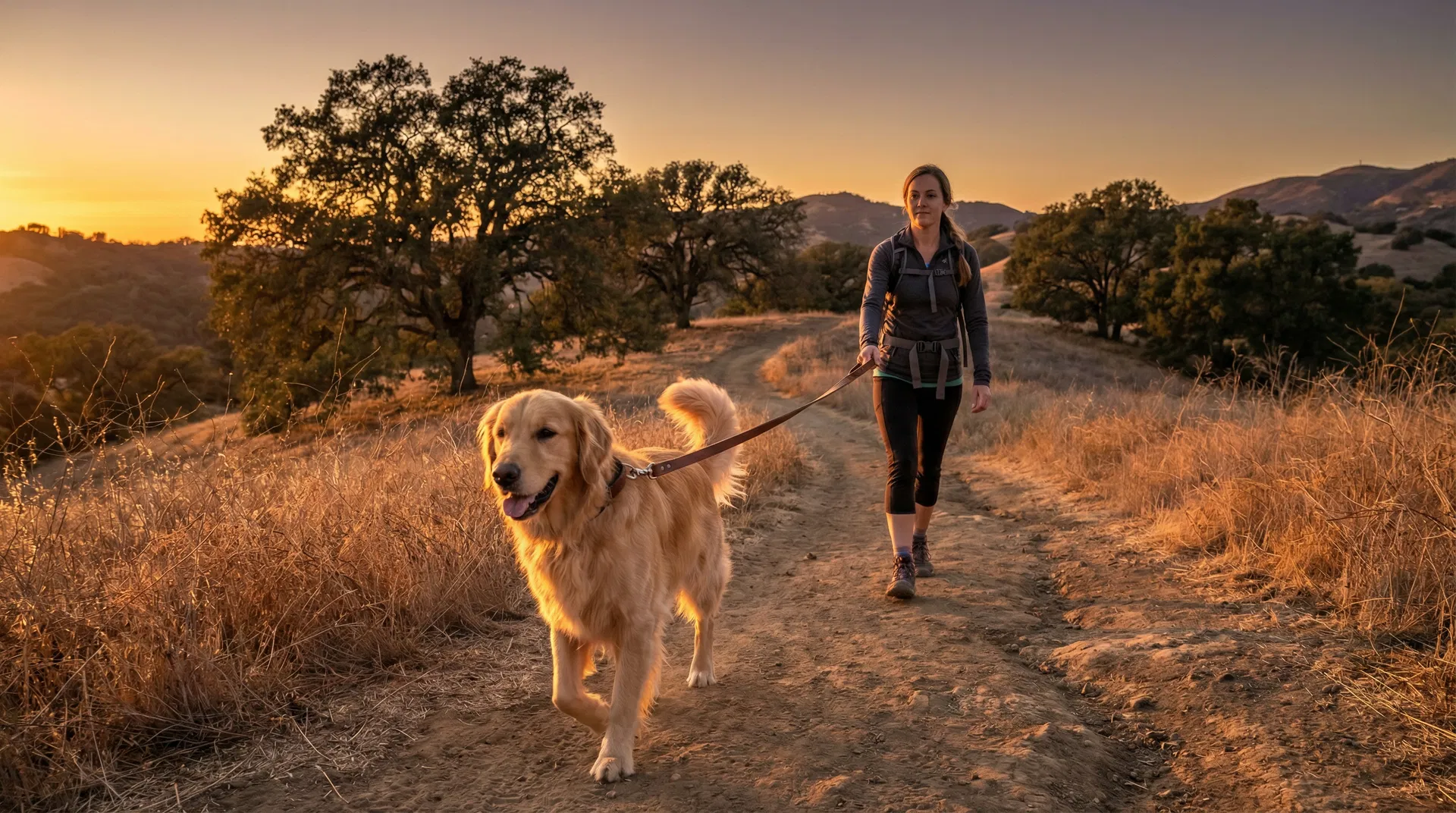
If you live anywhere between Malibu and Thousand Oaks, you already know the Santa Monica Mountains offer some of the best hiking in Southern California. From the oak-shaded canyons of Agoura Hills to the coastal bluffs above Malibu, from the wildflower meadows of Newbury Park to the creek trails of Westlake Village — there is no shortage of places to explore with your dog.
But after nearly 20 years of mobile grooming in the Conejo Valley, we have seen firsthand what can happen when pet owners hit the trails unprepared. Every spring and summer, we get calls from clients in Thousand Oaks, Oak Park, Calabasas, and Camarillo who come back from a hike and discover their dog picked up something unwanted along the way — a tick buried behind the ear, a foxtail lodged between the toes, or a mysterious rash from brushing against poison oak.
This guide covers the most common hazards you and your dog will encounter on trails between Malibu and Thousand Oaks, organized by season so you know exactly what to watch for and when.
The 7 Trail Hazards Every Local Dog Owner Should Know
| Hazard | Jan–Mar | Apr–Jun | Jul–Sep | Oct–Dec | Where to Watch |
|---|---|---|---|---|---|
| Foxtail Grass | Low | HIGH | HIGH | Moderate | Open fields, trail edges, dry grass areas |
| Ticks | Moderate | HIGH | Moderate | Low | Tall grass, leaf litter, wooded areas |
| Rattlesnakes | Low | HIGH | HIGH | Low | Rocky outcrops, sunny trail edges, brush piles |
| Poison Oak | Moderate | HIGH | Moderate | Low | Shaded canyon trails, creek beds |
| Hot Pavement / Heat | Low | Moderate | HIGH | Low | Paved trailheads, parking lots, inland areas |
| Coyotes | Moderate | Moderate | Moderate | Moderate | Dawn/dusk on all trails, open spaces near neighborhoods |
| Burrs & Thorns | Low | Moderate | HIGH | Moderate | Chaparral, off-trail areas, dry brush |
1. Foxtail Grass — The Most Dangerous Plant on the Trail
If you take away one thing from this article, let it be this: foxtails are the single most dangerous trail hazard for dogs in the Conejo Valley. These barbed grass seeds are everywhere from late spring through fall, lining the edges of every trail from Wildwood Park in Thousand Oaks to Solstice Canyon in Malibu. They are designed by nature to burrow forward and cannot reverse direction — which means once a foxtail attaches to your dog's fur, it will work its way deeper into the skin, ears, nose, eyes, or paw pads.
We dedicated an entire separate article to foxtails because they are that serious — read our complete foxtail guide here. But the short version: after every hike, check between your dog's toes, inside the ears, around the eyes, and in the armpits. If your dog starts sneezing violently, shaking their head, or obsessively licking a paw after a hike, get to a vet immediately.
Client story: A longtime client of ours in Agoura Hills called us after a Saturday morning hike at Cheeseboro Canyon. Her Goldendoodle, Biscuit, had been shaking his head nonstop since they got home. She thought it might be water in his ears from the creek crossing, but when we arrived for his scheduled groom that Monday, we found a foxtail lodged deep in his left ear canal. We referred her to her vet immediately — the foxtail had to be removed under sedation. Now she books a post-hike groom with us every time they hit the trails, and we always do a full foxtail check as part of the service.
2. Ticks — A Year-Round Concern in the Santa Monica Mountains
Unlike many parts of the country where ticks are seasonal, the mild climate between Malibu and Thousand Oaks means ticks are active year-round, with peak activity from March through June. The Western black-legged tick — the species that can carry Lyme disease — is native to the Santa Monica Mountains and thrives in the tall grass, leaf litter, and oak woodlands that line most trails in the area.
Popular tick hotspots include the trails around Malibu Creek State Park, Cheeseboro Canyon near Agoura Hills, and the wooded sections of Wildwood Park in Thousand Oaks. After every hike, run your hands over your dog's entire body, paying special attention to the ears, collar area, between the toes, and around the tail base.
Prevention tips: Use a veterinarian-recommended tick prevention product year-round. Oral preventatives like NexGard or Bravecto are popular choices among Conejo Valley pet owners. During grooming appointments, we always check for ticks and will alert you if we find any.
3. Rattlesnakes — Respect Their Space
Southern Pacific rattlesnakes are native to the hills between Malibu and Thousand Oaks and are most active from April through October. They are commonly found sunning themselves on rocky trail edges, near brush piles, and along the open hillsides of Agoura Hills, Calabasas, and the canyons above Malibu.
The single most effective thing you can do is keep your dog on a leash and on the trail. Dogs that wander off-trail into brush or rock piles are at the highest risk. Several local trainers in Thousand Oaks and Westlake Village offer rattlesnake aversion training, which teaches dogs to recognize and avoid the sight, sound, and smell of rattlesnakes. Ask your vet about the rattlesnake vaccine as well — it does not prevent envenomation but can buy critical time if a bite occurs.
If your dog is bitten, seek emergency veterinary care immediately. Do not attempt to suck out venom or apply a tourniquet.
4. Poison Oak — Your Dog Can Bring It Home to You
Poison oak grows abundantly along shaded canyon trails throughout the Santa Monica Mountains, especially near creek beds in Solstice Canyon, Malibu Creek State Park, and Topanga State Park. While dogs rarely react to the urushiol oil that causes the rash in humans, they can carry it on their fur and transfer it to you when you pet them or when they rub against furniture.
If you hiked through an area with poison oak, give your dog a thorough bath as soon as possible. Use dish soap or a degreasing pet shampoo to break down the oils. Better yet, schedule a post-hike groom — we use professional-grade shampoos that effectively remove urushiol and other trail contaminants from your dog's coat.
5. Hot Pavement and Heat Exposure
Summer temperatures in the inland areas of the Conejo Valley — Thousand Oaks, Moorpark, Simi Valley, Camarillo — regularly exceed 95°F, and pavement temperatures can reach 150°F or higher. Even the coastal areas around Malibu and Westlake Village can get dangerously hot during heat waves.
Use the seven-second rule: place the back of your hand on the pavement for seven seconds. If it is too hot for you, it is too hot for your dog's paw pads. Hike early in the morning or after sunset during summer months, carry at least 16 ounces of water per dog per hour of hiking, and watch for signs of heat exhaustion — excessive panting, drooling, stumbling, or vomiting.
6. Coyotes — Especially at Dawn and Dusk
Coyotes are common throughout the Conejo Valley and the Santa Monica Mountains. They are most active at dawn and dusk and are regularly spotted on trails near Oak Park, Newbury Park, Agoura Hills, and the open spaces bordering Thousand Oaks neighborhoods. Keep your dog on leash, stay alert, and if you encounter a coyote, make yourself large, make noise, and back away slowly. Never run.
7. Burrs, Stickers, and Thorny Chaparral
Beyond foxtails, the native chaparral that covers the hills between Malibu and Thousand Oaks is full of thorny shrubs, burrs, and prickly seeds that can tangle in your dog's coat. While less dangerous than foxtails, they can cause matting, skin irritation, and discomfort — especially in long-coated breeds like Goldendoodles, Australian Shepherds, and Spaniels that are popular with families in Westlake Village and Calabasas.
Keep longer-coated dogs trimmed during hiking season, and brush your dog thoroughly after every outdoor adventure. A post-hike grooming appointment can catch anything you missed.
Your Post-Hike Dog Safety Checklist
Do This After Every Hike
- Full body check — Run your hands over your dog's entire body, feeling for ticks, bumps, or embedded foxtails.
- Paw inspection — Check between every toe for foxtails, burrs, thorns, and cuts. Spread the toes apart and look carefully.
- Ear check — Look inside both ears for foxtails, ticks, or redness. If your dog is shaking their head, see a vet.
- Eye check — Look for redness, discharge, squinting, or pawing at the eyes.
- Nose check — Sudden violent sneezing after a hike almost always means a foxtail in the nasal passage. See a vet immediately.
- Wipe or bathe — At minimum, wipe down paws and belly. If you were near poison oak, a full bath is recommended.
- Water and rest — Offer fresh water and let your dog cool down in a shaded area before any further activity.
- Book a post-hike groom — A professional grooming session catches anything you missed and removes embedded trail debris from the coat.
Where We Groom After Your Hike
Cuddles N Suds serves the entire corridor between Malibu and Thousand Oaks, including Westlake Village, Agoura Hills, Calabasas, Oak Park, Newbury Park, Moorpark, Simi Valley, and Camarillo. We bring our fully equipped mobile salon to your driveway, so after a long hike, your dog can get a thorough bath, brush-out, and full body check without ever having to get back in the car.
Many of our active, outdoorsy clients in the Conejo Valley book a standing post-hike groom every two to four weeks during spring and summer. It is the best way to stay ahead of foxtails, ticks, and the other trail hazards that come with living in one of the most beautiful hiking regions in California.
Ready to book a post-hike groom? Book online or call us at (805) 409-7189.