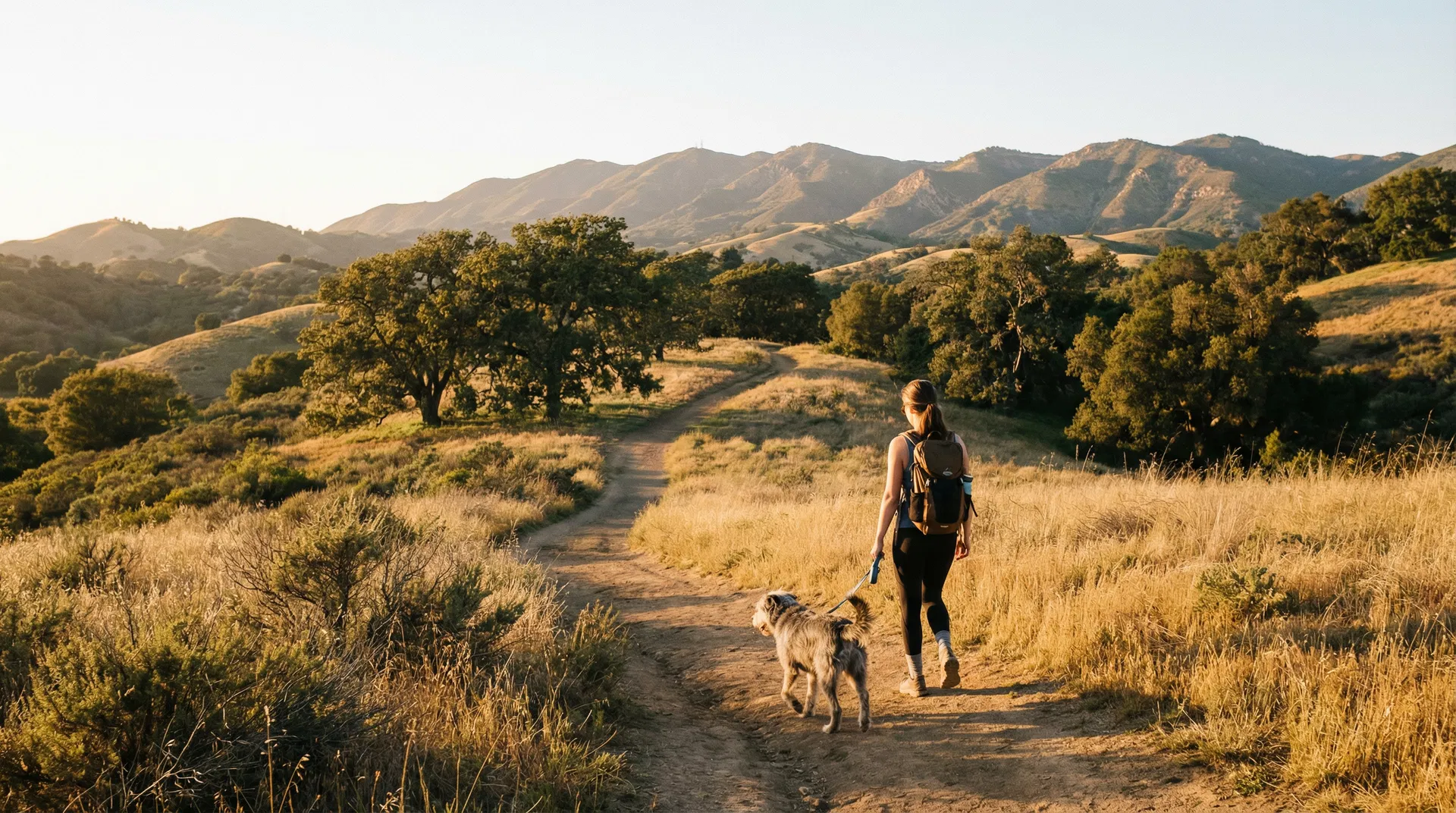
The Conejo Valley is one of the best places in Southern California to raise a dog. With miles of hiking trails, beautiful parks, and a community that genuinely loves pets, it's a dog owner's paradise. But the same outdoor environment that makes this area so special also comes with some seasonal hazards that every local pet owner should be aware of.
As mobile groomers who've been serving Thousand Oaks, Westlake Village, Agoura Hills, Malibu, and the surrounding areas since 2006, we've seen these issues come through our van countless times. Here's what to watch for — and how to protect your dog.
Foxtails: The Conejo Valley's Most Dangerous Plant
If you only remember one thing from this article, make it this: foxtails are the number one outdoor hazard for dogs in the Conejo Valley.
Foxtails are the dried seed heads of certain grasses that are everywhere in our area from late spring through fall. They look like small, barbed arrowheads, and they're designed by nature to burrow forward — which means once they attach to your dog's fur, they can work their way into the skin, ears, nose, eyes, and even between the toes.
Foxtails can cause serious infections and abscesses, and in rare cases, they can migrate internally and become life-threatening. They're especially common along trails in the Santa Monica Mountains, Wildwood Park, Conejo Valley Botanic Garden trails, and the open spaces around Thousand Oaks and Westlake Village.
What to do:
- After every hike or walk in grassy areas, thoroughly check your dog's entire body — especially between the toes, in the ears, around the eyes, and in the armpits and groin area.
- Keep the fur between your dog's toes trimmed short (we do this at every groom).
- If your dog is suddenly shaking their head, sneezing violently, or licking a paw obsessively, see your vet immediately — these are classic signs of a foxtail.
- Consider avoiding tall, dry grass areas during peak foxtail season (May through November).
Ticks: A Year-Round Concern
Ticks are present in the Conejo Valley year-round, though they're most active in spring and early summer. The most common species in our area are the Western black-legged tick (which can carry Lyme disease) and the American dog tick.
Popular hiking areas like Wildwood Park, Chesebro Canyon, and the trails around Malibu Creek State Park are known tick habitats. Ticks thrive in tall grass, leaf litter, and wooded areas — exactly the places dogs love to explore.
What to do:
- Use a veterinarian-recommended tick prevention product year-round. Oral preventatives (like NexGard or Bravecto) or topical treatments are both effective options.
- After hikes, run your hands over your dog's entire body, feeling for small bumps. Check inside the ears, around the collar area, between the toes, and around the tail.
- If you find a tick, remove it promptly with fine-tipped tweezers, grasping as close to the skin as possible and pulling straight out with steady pressure.
- During grooming, we always check for ticks and will alert you if we find any.
Fleas: Seasonal Spikes in Warm Weather
Fleas are a perennial issue in Southern California's mild climate. While they're present year-round, flea populations spike during warm, humid periods — particularly in late spring and early fall.
Fleas can cause intense itching, allergic dermatitis, and can transmit tapeworms. A single flea can lay up to 50 eggs per day, so infestations can escalate quickly.
What to do:
- Maintain year-round flea prevention as recommended by your veterinarian.
- Wash your dog's bedding weekly in hot water during peak flea season.
- If you notice your dog scratching excessively, check for flea dirt (tiny black specks in the fur). Place some on a wet paper towel — if it turns reddish-brown, it's flea dirt.
- We offer flea shampoo treatments as an add-on service during grooming appointments.
Rattlesnakes: Respect Their Space
The Conejo Valley is home to Southern Pacific rattlesnakes, which are most active from April through October. They're commonly found on hiking trails, in rocky areas, and along the edges of open spaces — particularly in the Santa Monica Mountains and the hills around Agoura Hills and Malibu.
What to do:
- Keep your dog on a leash on trails, especially during warm months.
- Stay on established trails and avoid letting your dog explore rock piles, dense brush, or tall grass.
- Consider rattlesnake aversion training — several local trainers offer this seasonal program.
- Ask your vet about the rattlesnake vaccine, which can buy valuable time if a bite occurs.
- If your dog is bitten, seek emergency veterinary care immediately. Do not try to suck out venom or apply a tourniquet.
Burrs and Stickers
Beyond foxtails, the Conejo Valley's trails are home to various burrs, stickers, and prickly seeds that can tangle in your dog's coat. While less dangerous than foxtails, they can cause matting, skin irritation, and discomfort.
What to do:
- Brush your dog thoroughly after every outdoor adventure.
- Keep longer-coated dogs trimmed during hiking season to reduce the surface area for burrs to attach.
- Consider a light-fitting dog vest or bodysuit for heavy trail use.
Hot Pavement
Southern California summers bring pavement temperatures that can easily exceed 150°F — hot enough to burn your dog's paw pads in seconds. This is a concern throughout Thousand Oaks, Westlake Village, and especially in the more inland areas like Simi Valley and Moorpark where temperatures run hotter.
What to do:
- Use the "seven-second rule": place the back of your hand on the pavement for seven seconds. If it's too hot for you, it's too hot for your dog's paws.
- Walk early in the morning or after sunset during summer months.
- Stick to shaded paths and grassy areas when possible.
- Consider dog booties for unavoidable hot surfaces.
Coyotes
Coyotes are common throughout the Conejo Valley and are most active at dawn and dusk. While attacks on leashed dogs are rare, small dogs left unattended in yards can be at risk.
What to do:
- Never leave small dogs unattended outdoors, especially at dawn and dusk.
- Keep dogs on leash during walks in areas where coyotes are known to be active.
- If you encounter a coyote, make yourself large, make noise, and back away slowly. Do not run.
The Grooming Connection
Regular professional grooming plays an important role in protecting your dog from these outdoor hazards. During every groom, we check for ticks, foxtails, skin irritation, and other issues. We keep the fur between toes trimmed to reduce foxtail risk, and we can spot early signs of flea infestations or skin problems that you might miss at home.
If you're an active outdoor family in the Conejo Valley, we recommend grooming every 4 weeks during spring and summer to stay ahead of seasonal hazards. Book your next appointment or call us at (805) 409-7189.

